

For millions of people, weight loss is not just about appearance—it’s about health, mobility, confidence, and long-term quality of life. Yet traditional approaches like dieting, exercise programs, and even prescription medications often fall short, especially for individuals living with obesity as a chronic medical condition.
That’s where clinical research on obesity comes in.
Many people are surprised to learn that participating in a clinical research study can provide no-cost access to cutting-edge weight-loss treatments, along with study-related medical care and ongoing support. These studies are designed not only to advance science but also to help real people achieve meaningful health outcomes in a safe, structured, and closely monitored environment.
In this article, we’ll break down exactly what’s included in no-cost weight-loss treatment through clinical research, how these studies work, who may qualify, and why this option is becoming increasingly popular among individuals seeking new solutions for weight management.
 Clinical research studies, also called clinical trials, are carefully designed medical studies that evaluate new treatments, study related medications, or combinations of therapies. In obesity research, these studies focus on improving how the body regulates appetite, metabolism, and weight over time.
Clinical trials differ from commercial weight loss programs because they are:
Participants are not “guinea pigs.” Instead, they are volunteers who get organized care while helping to advance medicine.
When a research project offers complimentary weight-loss therapy, it’s not a promotional trick. In the majority of clinical trials for obesity, all medical care related to the study is provided to participants at no cost.
This typically includes:
Because the study sponsor covers these costs, participants do not bill insurance for study-related services.
 1. Study-Related Medication or Investigational Treatment
At the core of most obesity clinical trials is access to investigational or next-generation weight-loss treatments. These may include:
These medications are developed based on years of prior research and earlier-phase studies. By the time they reach large participant trials, they have already passed multiple safety checkpoints.
Participants may receive:
All dosing, administration, and follow-up are managed by the study’s medical team.
Before joining, volunteers are carefully screened to ensure the study is appropriate and safe for them. This usually involves:
This check step keeps participants safe and helps ensure the study’s findings are correct.
One of the most valuable (and often overlooked) benefits of participating in clinical research is continuous study-related medical supervision.
Throughout the study, participants are regularly monitored by:
Visits are scheduled at defined intervals, allowing the care team to:
This level of consistent follow-up is rarely available in standard weight-loss programs.
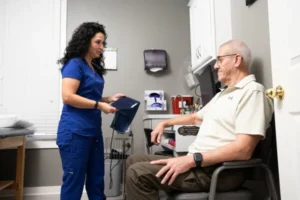 Because clinical trials depend on information, those taking part get regular health check-ups that many wouldn’t typically receive.
These check-ups might involve:
All tests are connected to the research and are free of charge. A doctor involved in the study reviews the results to ensure participants’ safety.
Unlike DIY weight-loss approaches, clinical trials follow a structured schedule. Participants know exactly when visits occur and what to expect at each stage.
This structure provides:
Many participants report that this structure alone helps them stay engaged and motivated throughout the study.
While the primary focus of many obesity studies is medication-based, most protocols also include education around nutrition and lifestyle behaviors.
This guidance is:
Importantly, these studies do not promote extreme dieting or unsafe practices.
Beyond receiving no-cost study-related care, participants in numerous weight-loss research studies can also get paid. Payment might be given for:
The specific payment amount varies by study and location, but these details are always made clear before someone joins.
 While each study has specific criteria, many obesity trials look for participants who:
Some studies may exclude individuals with type 1 diabetes or recent bariatric surgery, while others may allow controlled type 2 diabetes.
Eligibility is always determined during the screening process.
Safety is the foundation of all legitimate clinical research.
Weight-loss clinical trials in the U.S. follow:
Participants are:
If side effects occur, they are closely monitored and addressed by medical professionals.
In reality, participants receive more medical oversight than in most standard care settings.
Participation is always voluntary. You can leave the study at any time.
Clinical trials exist because treatments must be proven safe and effective before public release—not because they are risky.
As obesity is increasingly recognized as a chronic, biological condition—not a failure of willpower—more individuals are seeking medical, science-based solutions.
Clinical research offers:
For many, it represents a practical, empowering alternative to repeated cycles of dieting and frustration.
 Not all research sites are the same. Choosing a reputable, experienced site matters.
Organizations like Quality Research conduct obesity studies with a strong emphasis on participant care, safety, and transparency. Their teams work closely with participants to ensure they understand every step of the process and feel supported from screening through study completion.
Free weight-loss treatment through clinical research is not a shortcut—it’s a medically guided path grounded in science. For individuals who have struggled with traditional approaches or want access to emerging therapies, clinical trials can offer both hope and high-quality care.
If you’re curious about participating, the next step is simple: explore available studies, review eligibility criteria, and speak with a research coordinator to see if a study may be a good fit for you.
Clinical research doesn’t just change the future of medicine—it can change lives today.