

Exciting research suggests that a new approach could help even those with severe liver disease.
 Nearly 40% of American adults are estimated to have fatty liver disease, a condition that can lead to serious complications—including liver failure and death. It often remains undiagnosed until it advances to cirrhosis, resulting in permanent liver scarring.
Until recently, doctors could only recommend diet and lifestyle changes or manage related conditions like diabetes and high cholesterol. However, these efforts often weren’t enough to stop the disease from progressing. Now, a groundbreaking study suggests that weight-loss surgery could significantly reduce the risk of severe liver complications—even for some patients with cirrhosis.

A study in Nature Medicine looked at patients with obesity and liver damage caused by a severe form of fatty liver disease called metabolic dysfunction-associated steatohepatitis (MASH). Since obesity is a key risk factor for MASH, researchers aimed to determine whether weight-loss surgery could enhance the health of these patients.
The findings were striking:
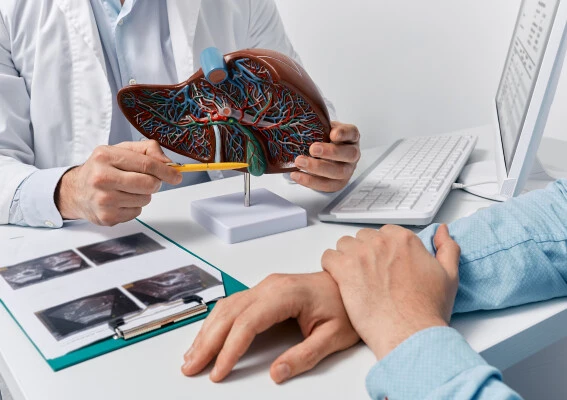 MASH begins with fat buildup in the liver, which can lead to inflammation and scarring (fibrosis). Research has already shown that significant weight loss can reverse fibrosis and improve long-term liver health. However, there was little data on whether patients with cirrhosis—considered the most advanced stage of liver disease—could still benefit.
“Most people assume that cirrhosis is a death sentence,” said Dr. Rotonya Carr, head of gastroenterology at the University of Washington. “But emerging data suggests otherwise.”
This new study, conducted by researchers at the Cleveland Clinic, analyzed 168 adults with obesity and cirrhosis caused by MASH. These patients had compensated cirrhosis, meaning they hadn’t yet developed life-threatening complications.
Weight-loss surgery led to significantly better outcomes, reducing the risk of complications like:
Dr. Ali Aminian, the study’s lead author and director of the Cleveland Clinic’s Bariatric and Metabolic Institute, emphasized that long-term, sustained weight loss can dramatically alter the course of MASH—even in some of the sickest patients.
Patients with cirrhosis face increased surgical risks, but experts have noted positive safety outcomes in recent studies. Dr. Vandana Khungar, a liver transplant specialist at Yale University, pointed out that surgery can be a viable option when performed at a center experienced in treating cirrhosis patients. She highlighted the need to consider individual risks and ensure access to appropriate care when making treatment decisions.

While bariatric surgery has demonstrated meaningful benefits, researchers are also encouraged by the potential of newer medical therapies aimed at supporting significant weight loss. Recent late-stage clinical trials have shown that certain injectable treatments can substantially reduce liver inflammation associated with MASH.
In one Phase 3 study, 63% of participants receiving the active treatment experienced complete resolution of MASH, compared to 34% in the placebo group.
Additionally, many participants showed at least a one-stage improvement in liver fibrosis.
At this time, no clinical trials have confirmed whether these therapies can reverse advanced Stage 4 fibrosis (cirrhosis). Still, experts remain optimistic that continued innovation—through both surgical and non-surgical approaches—may lead to more effective treatment options in the near future.
 for Liver Disease Patients
For decades, treatment options for fatty liver disease and cirrhosis were extremely limited. But thanks to new research on bariatric surgery and weight-loss medications, patients now have renewed hope. While more studies are needed, these findings mark a major step toward potentially reversing liver disease—even in its later stages.